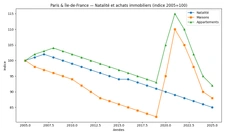
Birth rate in Paris and the Île-de-France region: a demographic dynamic that supports the real estate market
📉 A national decline that masks regional nuances
Alors que la France connaît une baisse historique de sa natalité— seulement 645 000 naissances en 2025, un niveau jamais vu depuis la Seconde Guerre mondiale et un taux de fécondité à 1,56 enfant par femme — l’Île-de-France tire son épingle du jeu.
🚼 A younger and more fertile region
In Ile-de- France (Paris and its surrounding suburbs), the birth rate is significantly higher than the national average: approximately 1.82 children per woman and a birth rate of around 12.4 per thousand, compared to approximately 9.4 per thousand in France as a whole.
This is explained by a younger population—a large percentage of Île-de-France residents are under 30—as well as a positive natural increase (more births than deaths).
🏠 Impact on the Parisian real estate market
1. Sustained Demand for Family Housing
This relatively high birth rate supports demand for larger properties (3-bedroom, 4-bedroom, and larger), particularly in suburban areas attractive to young families.
2. Dynamic Development of Areas Close to Schools and Services
Neighborhoods well-served by public transportation and close to daycare centers and schools remain highly attractive, with significant upward pressure on prices despite a national decline in population growth.
3. Continued Rental Investment
The demographic profile of the Île-de-France region, combined with strong economic appeal, makes it a key location for rental property investment, even though low national birth rates encourage diversification of housing types (intergenerational housing, small upscale apartments, etc.).
🧭 What future for Paris?
While birth rates still help to support local demand, other factors such as the cost of living, air quality, or the mobility of young households influence their choice of residence, with flows sometimes directed towards the outer suburbs or more affordable metropolitan areas..
👉Conclusion: Île-de-France maintains a more favourable demographic dynamic than the national average, which partly limits the impact of the decline in birth rates on the real estate market, but the landscape remains heterogeneous and evolving.