Creating an SCI in France as a Foreign Investor: The Complete Guide for Non-Residents
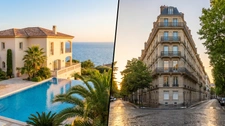
The Société Civile Immobilière (SCI - French real estate investment company) has become increasingly popular among international investors. Whether you’re a British expatriate looking to acquire a villa on the French Riviera, an American investor interested in a Parisian apartment, or a Swiss resident planning a family property acquisition, the SCI offers valuable flexibility for foreign property ownership in France.
The good news? French law imposes no nationality or residency restrictions for creating or managing an SCI. The reality? Non-resident investors face specific practical challenges, banking requirements, and tax obligations that differ significantly from French residents.
This comprehensive guide walks you through everything foreign investors need to know about creating and managing an SCI in France, from legal requirements to country-specific tax pitfalls.
Can Foreigners Create an SCI in France? The Legal Framework
No Nationality or Residency Restrictions
French law is remarkably open to foreign investment in real estate. Any individual or company, regardless of nationality or country of residence, can freely:
- Become a partner (associé) in a French SCI
- Serve as manager (gérant) of an SCI
- Create a new SCI from scratch
- Acquire existing SCI shares
This applies equally to:
- EU/EEA citizens and non-EU nationals
- Tax residents and non-residents
- Individuals and corporate entities
- Expatriate French citizens and foreign nationals who have never lived in France
Why Foreign Investors Choose the SCI Structure
International buyers favor the SCI for several strategic reasons:
Estate Planning Across Borders: The SCI simplifies inheritance for international families. Rather than dealing with French forced heirship rules on direct property ownership, you progressively transfer shares with potential tax advantages.
Multi-Generational Ownership: Ideal for families split between countries. Parents in London can maintain usufruct (use rights and rental income) while children in New York receive bare ownership at lower tax cost.
Asset Protection: For business owners, separating French property assets from business activities provides legal protection across jurisdictions.
Avoiding Undivided Ownership (Indivision): International co-owners often face nightmares with indivision, where unanimous consent is required for every decision. The SCI’s clear governance structure prevents deadlock situations.
SCI for Foreign & Non-Resident Investors: What You Must Know
Practical Challenges for Non-Residents
While legally unrestricted, non-resident SCI owners and managers face real-world obstacles:
1. Banking Complications
Opening a French bank account for your SCI is mandatory but increasingly difficult for non-residents. French banks now require:
- Company bylaws (statuts) with certified translations
- Proof of foreign address with certified translation
- Tax residency certificate from your country
- Foreign tax identification number
- Physical presence at branch for account opening (video verification rarely accepted)
- Sometimes: proof of substantial cash deposit or property value
Practical tip: Major international banks (HSBC, BNP Paribas International) are generally more accommodating for non-resident SCI accounts than regional banks.
2. Physical Presence Requirements
As SCI manager, you’ll need to handle:
- Signing lease agreements with tenants
- Meeting with notaries for property transactions
- Dealing with French tax authorities (Direction Générale des Finances Publiques)
- Property maintenance and renovation approvals
Remote management is possible but complicated. Many non-resident investors appoint a French-based representative or co-manager to handle day-to-day operations.
3. Administrative Burden
Non-residents must navigate:
- Annual French tax filings (even if taxed at zero)
- Annual property occupancy declarations
- Correspondence with French administration (often French-language only)
- Compliance with both French regulations and home country reporting requirements
Tax Obligations for Non-Resident SCI Investors
This is where foreign ownership becomes significantly more complex than for French residents.
Rental Income Taxation
If your SCI generates rental income, you’re taxable in France regardless of where you live. All French tax treaties grant France the right to tax French-source real estate income.
For non-residents:
- Minimum tax rate: 20-30% (higher than many French residents pay)
- Plus mandatory social contributions: 17.2%
- Total effective rate: approximately 37-47%
However: If you can prove your French resident tax rate would be lower (based on worldwide income), you can request application of the progressive scale.
Double taxation risk: Your home country may also tax the same income. Outcome depends on the France-[your country] tax treaty and elimination clauses.
Example: Belgian residents face systematic double taxation - France taxes SCI rental income while Belgium treats distributions as dividends, also taxable in Belgium.
Corporate Tax (IS) vs Income Tax (IR) for Non-Residents
By default, SCIs operate under the Income Tax (IR) regime:
- Partners are taxed individually on their share of income
- Long-term capital gains benefit from exemptions (full exemption after 22-30 years)
- Ideal for long-term family ownership
However, SCIs can elect or be required to use Corporate Tax (IS):
- Company pays 25% corporate tax
- Dividends distributed to non-resident partners face withholding tax (0-15% depending on tax treaty)
- Higher capital gains tax at sale (depreciation reduces book value)
- Automatic if you rent furnished properties (meublé)
Critical warning: If your SCI rents furnished property, it’s automatically subject to IS - which can have devastating consequences at resale. Many foreign investors don’t realize this until too late.
Capital Gains Tax for Non-Residents
When you sell your French property or SCI shares:
Under IR regime:
- 19% income tax
- 17.2% social contributions (or 7.5% for EEA/Switzerland residents)
- Progressive exemptions: full exemption from income tax after 22 years, from social charges after 30 years
Under IS regime:
- Capital gain calculated on depreciated book value (usually much higher than purchase price)
- 25% corporate tax on the gain
- 30% flat tax (PFU) on distributed dividends
The Dreaded 3% Annual Tax
All companies (French or foreign) owning French property on January 1st face a 3% annual tax on property market value.
Good news: Your SCI is automatically exempt if you file the annual Form 2072 declaration. Don’t forget this filing or you’ll face a massive unexpected tax bill.
Wealth Tax (IFI) for Non-Residents
If your French real estate assets (including SCI shares proportional to French property) exceed €1.3 million net value, you’re subject to French Real Estate Wealth Tax (IFI), even as a non-resident.
Rates range from 0.5% to 1.5% on the value above €1.3M.
Swiss residents beware: Some Swiss cantons tax SCI shares that are exempt in France, whereas direct ownership would be Swiss-exempt. The SCI structure can actually increase your tax burden.
Country-Specific Pitfalls: UK, Belgium, Switzerland, US
United Kingdom Investors
The “Benefit in Kind” Trap: If you personally use your SCI-owned French property (vacation home), UK tax authorities may consider this a taxable benefit in kind - even though France doesn’t tax this arrangement for IR-regime SCIs.
Post-Brexit considerations: UK residents now face non-EEA treatment for social charges (17.2% vs 7.5% for EEA).
Belgian Investors
Systematic Double Taxation: Belgium treats SCI distributions as dividends, taxable in Belgium, while France already taxed the same income as property income. The France-Belgium tax treaty doesn’t fully eliminate this double taxation.
Solution: Careful structuring and professional cross-border tax advice essential.
Swiss Investors
Cantonal Variations: Some Swiss cantons tax SCI shares in their wealth tax base, whereas direct French property ownership would be exempt (taxed only in France). The SCI structure can backfire for Swiss residents in certain cantons.
Succession treaties: France-Switzerland succession treaty can be very favorable, potentially exempting French property from French inheritance tax.
US Investors
IRS Reporting Requirements: US citizens and residents must report foreign SCI ownership on multiple forms (FBAR, Form 8938, potentially Form 5471 if SCI elects IS).
PFIC Rules: If your SCI elects Corporate Tax (IS), it may be treated as a Passive Foreign Investment Company (PFIC) by the IRS, triggering punitive US taxation.
Estate Tax: US citizens face potential US estate tax (40% rate) on French assets above $60,000 for non-US spouse or $13.6M for US spouse, in addition to French inheritance tax.
The SCI Creation Procedure for Foreign Investors
The legal steps are identical to French residents, but with added complications:
Step 1: Draft the Bylaws (Statuts)
Work with a notaire (notary) or specialized lawyer. For non-residents, ensure bylaws address:
- Manager powers for remote management
- Authorization for video/remote voting at general assemblies
- Clear procedures for partner communications across time zones
- Approval clauses (agrément) for share transfers to prevent unwanted third parties
Cost: €1,500-€3,000+ for professional drafting (higher with international complexity)
Step 2: Constitute Share Capital
- Minimum: €1 (but typically set based on property value)
- Can be cash or property contribution
- If contributing existing property: notarial deed mandatory + registration duties
Banking challenge: You’ll need to open a French bank account to deposit capital - see banking complications above.
Step 3: Publish Legal Notice
Publish formation notice in Journal d’Annonces Légales (JAL) in the department where the SCI’s registered office is located.
Cost: €150-€250
Note: Legal notice can be published even if you’re abroad; your lawyer/notaire handles this.
Step 4: Register with INPI
Submit registration file to France’s business formalities portal (guichet unique) managed by INPI.
Required documents:
- Signed bylaws
- Legal notice publication certificate
- Form M0
- Manager’s ID (passport accepted for foreigners)
- Registered office domiciliation certificate
- Registration fees
Timeline: 7-15 working days after complete file submission
Complication for non-residents: Obtaining a French registered office address. Options include:
- Using your French property address
- Domiciliation service company
- Lawyer/accountant address
Step 5: Obtain Kbis Extract
Once registered, you receive the Kbis - your SCI’s official company certificate. You’ll need this for:
- Opening additional bank accounts
- Signing property purchase deeds
- Dealing with French administration
Timeline and Costs for Foreign Investors
Total Timeline: 6-12 Weeks
Longer than French residents due to:
- International document preparation and translation
- Banking account opening delays
- Coordination across time zones
- Notary appointment scheduling (especially in peak summer season)
Recommendation: Start the SCI creation process 3-4 months before signing a property purchase agreement.
Total Creation Costs: €3,000-€6,000
- Bylaws drafting: €1,500-€3,000 (higher with international clauses)
- Notary fees: €1,500-€3,000
- Legal notice: €150-€250
- Registration: €200-€300
- Translations and certified copies: €200-€500
- Optional: tax advisor consultation: €500-€1,500
Annual Operating Costs: €800-€3,000+
- Accounting services: €600-€2,500 (higher for cross-border complexity)
- Tax filing assistance: €200-€1,000
- Registered office domiciliation: €200-€500
- Bank fees: variable
Essential Advice for Foreign SCI Investors
1. Appoint a Tax Representative
For non-EU residents especially, appointing a représentant fiscal (French tax representative) is highly recommended, sometimes required. This person handles French tax filings and represents you with tax authorities.
2. Understand Tax Treaty Implications
The France-[your country] tax treaty determines:
- Which country has primary taxing rights
- Withholding tax rates on dividends
- Elimination of double taxation methods
- Inheritance and gift tax treatment
Professional cross-border tax advice is essential - not optional.
3. Consider Annual Property Occupancy Declaration
Since 2023, all French property owners must file an annual occupancy declaration by June 30, indicating whether property is:
- Owner-occupied (primary or secondary residence)
- Rented (furnished or unfurnished)
- Vacant
Failure to file: €150 penalty per property.
4. Plan for Currency Risk
If your income is in GBP, USD, CHF or other currencies, factor in exchange rate fluctuations when calculating:
- Property acquisition cost
- Annual tax payments
- Rental income value
- Eventual sale proceeds
5. Structure for Your Goals
Long-term family ownership: IR regime, progressive share transfers to children, hold 30+ years for full exemption
Short-term investment: May prefer direct ownership or other structures; SCI benefits minimal
Rental income focus: Carefully model IR vs IS taxation based on your marginal rate and country
Common Mistakes Foreign Investors Make
1. Using Generic Template Bylaws
Online templates don’t address non-resident specific needs: remote management, international communications, cross-border succession planning.
2. Underestimating Annual Compliance Burden
French bureaucracy is substantial. Budget time and money for ongoing administration or hire professional support.
3. Ignoring Home Country Tax Consequences
Many focus solely on French taxation and get hit with unexpected home country taxes or reporting penalties.
4. Renting Furnished Without Understanding IS Implications
Furnished rentals trigger automatic Corporate Tax, dramatically increasing taxation at resale. Many discover this too late.
5. Failing to File Annual Declarations
Missing the Form 2072 filing triggers the 3% tax. Missing occupancy declarations: €150 penalties. Missing home country foreign asset reporting: potentially severe penalties (especially US).
6. Not Planning for Succession
French forced heirship rules can override your home country will. Proper succession planning through SCI structure + international will coordination is essential.
FAQ: Foreign Investors’ Questions
Do I need a French address to create an SCI?
You need a French registered office (siège social) for the SCI, but this can be your French property address, a domiciliation service, or your lawyer’s address. You personally don’t need French residency.
Can I manage the SCI entirely remotely?
Legally yes, practically challenging. You’ll need trusted local contacts for property management, emergencies, and dealing with French administration. Many non-residents appoint a French co-manager.
What happens if I become French tax resident later?
Your SCI taxation changes - you’ll be taxed on worldwide income as a French resident, but your SCI structure remains valid. Consult a tax advisor before changing residence.
Can my SCI own properties in multiple countries?
An SCI can only own real estate; French SCIs typically own French property. For multi-country portfolios, separate structures per country are usually preferable.
What if France-[my country] has no tax treaty?
Without a tax treaty, you face potential full taxation in both countries with no relief mechanism. This makes SCI investment significantly less attractive; consider alternative structures.
Is the SCI recognized in my country for tax purposes?
This varies. The US generally recognizes SCIs as partnerships or (if IS-elected) corporations. The UK may treat them as transparent or opaque depending on circumstances. Professional advice essential.
Ready to Create Your SCI as a Foreign Investor?
Creating an SCI in France as a non-resident investor is legally straightforward but practically complex. Between French tax obligations, home country reporting requirements, banking challenges, and ongoing compliance, international investors need experienced professional guidance.
Every situation is unique: your nationality, tax residence, investment goals, family structure, and long-term plans all impact whether an SCI is right for you - and how to structure it optimally.
As an Optimhome real estate advisor specialized in both the French Riviera (Nice and surroundings) and Île-de-France (Paris, Hauts-de-Seine, Val-de-Marne), I regularly work with international clients on SCI-structured acquisitions. Whether you’re seeking a family property, rental investment, or custom estate planning solution, I provide personalized guidance through every step of your French property journey.
I work with trusted partners: international tax advisors, bilingual notaires, cross-border accountants, and banking specialists who understand non-resident challenges.
📧 Email: [email protected]
📞 Phone: +33 (0)7 82 39 32 39
Don’t navigate French real estate alone - let’s discuss your project and create a strategy that works across borders.